Office365
Office365 is an application template in the Office Software (SaaS) and IAM category of the Application Catalog. Its card describes it as Office365 audit event. Installing it from the form below adds an application to Applications. Its template ID, Office365, is the one listed on Application Templates.
Menu path: Applications → Install Application → Office365 · URL path: /v2/applications/install?template=Office365
Task guide: Office365 Audit API
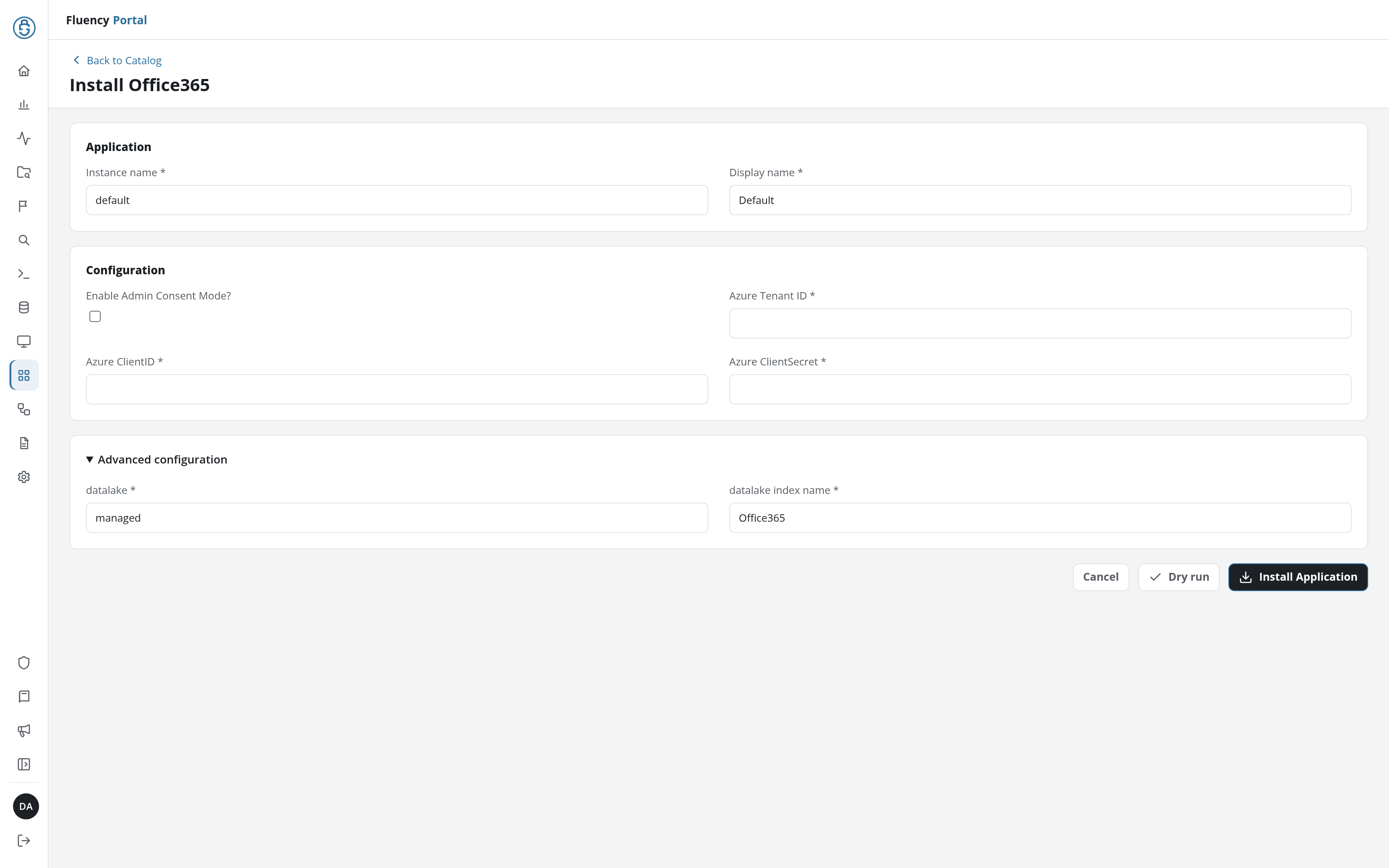
Application
The two fields every install form starts with: Instance name names this installation in its URL, and Display name is shown for it on Applications and its details page.
| Field | Type | Required | Default |
|---|---|---|---|
| Instance name | Text | Yes | default |
| Display name | Text | Yes | Default |
Configuration
The fields depend on the Enable Admin Consent Mode? checkbox, which is ticked when the form opens.
Ticked, the form asks for Admin Email address:
| Field | Type | Required | Default |
|---|---|---|---|
| Enable Admin Consent Mode? | Checkbox | No | Ticked |
| Admin Email address | Text | Yes | - |
Unticked, the form asks for Azure Tenant ID, Azure ClientID and Azure ClientSecret instead:
| Field | Type | Required | Default |
|---|---|---|---|
| Azure Tenant ID | Text | Yes | - |
| Azure ClientID | Text | Yes | - |
| Azure ClientSecret | Password | Yes | - |
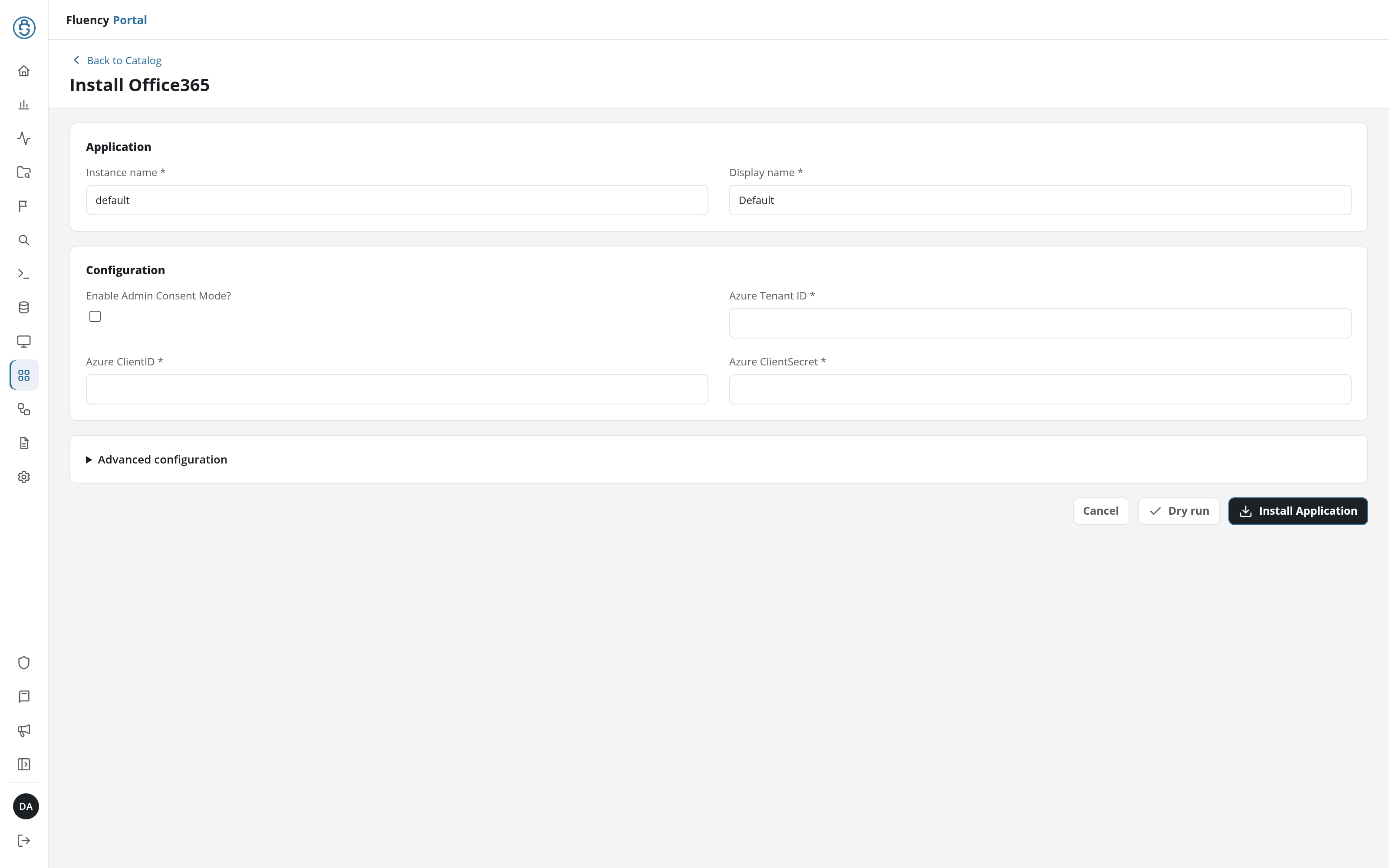
Advanced configuration
Collapsed when the form opens; click its heading to show the data lake the application writes to.
| Field | Type | Required | Default |
|---|---|---|---|
| datalake | Text | Yes | managed |
| datalake index name | Text | Yes | Office365 |
Install
Install Application installs Office365 with the values in the form; Dry run checks them first, without installing (see Dry run); Cancel returns to the catalog without installing. Every template's form shares the shape described under Install Form.