Login
The login page itself sits outside the Page Functionality reference, which begins after sign-in. The screens below are current; the Profile page reached after signing in is documented at Page Functionality → Settings → Profile.
For reference, this is what you land on in the current interface once you have signed in — the Home dashboard, with the navigation bar across the top:
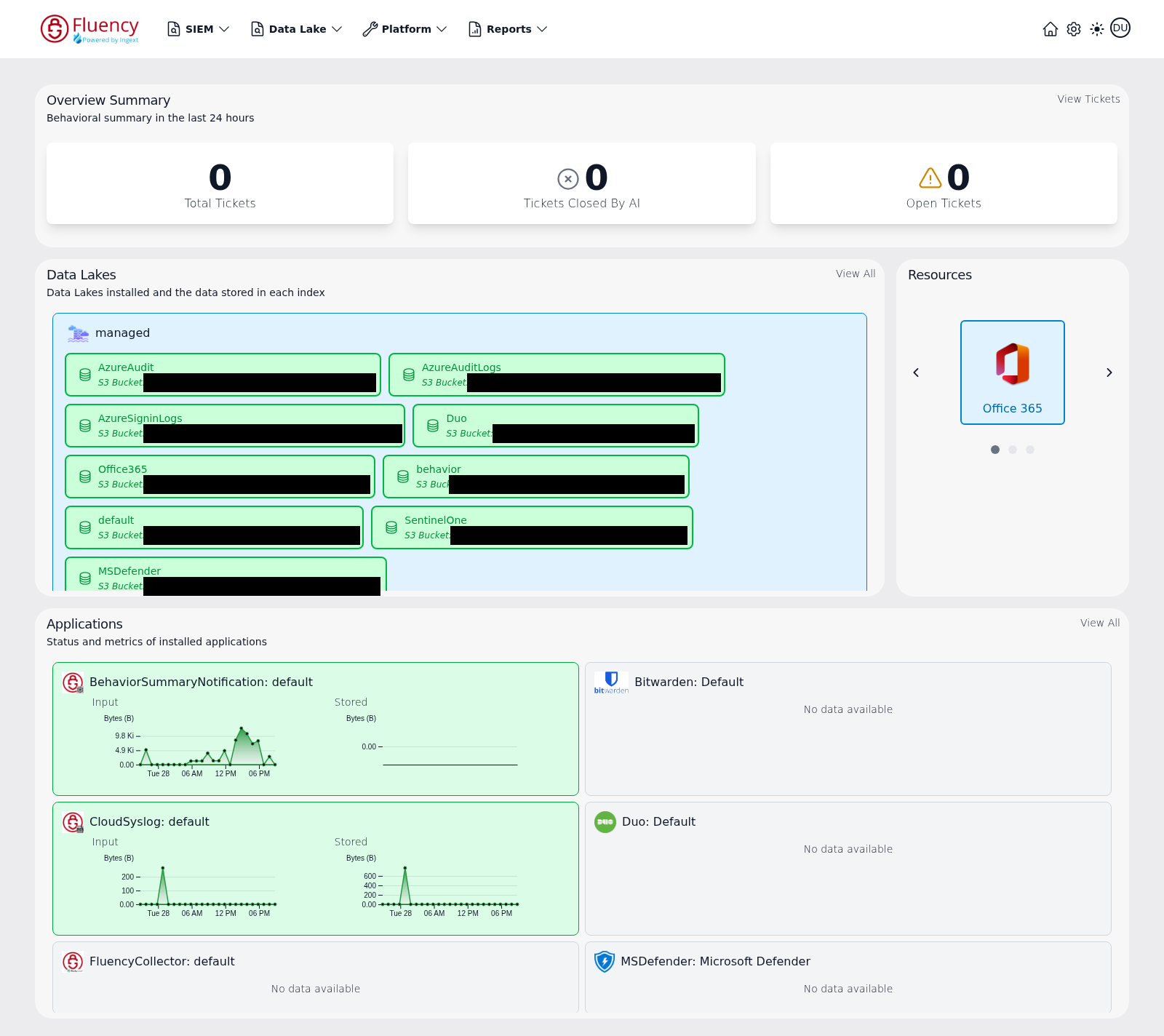
On the right side of that bar are the Home icon, the Settings (gear) icon, a light/dark theme toggle, and the account avatar. The account menu — including your profile — is behind the avatar, not behind a name in the upper-right corner.
Navigate to the unique URL assigned to your Fluency Portal. It will typically be in the following format (For standard deployments):
https://<companyname>.app.ingext.io
OAuth Login
The preferred method of authentication is via an OAuth provider. Fluency supports authenticating with either Microsoft or Google.
The OAuth provider is normally configured during the initial setup process (if you are the first user), or determined by the existing Admin account that created your user.
On the login page, either select one of the two OAuth options to be taken to a new page to authenticate directly with the selected OAuth provider (Microsoft or Google).
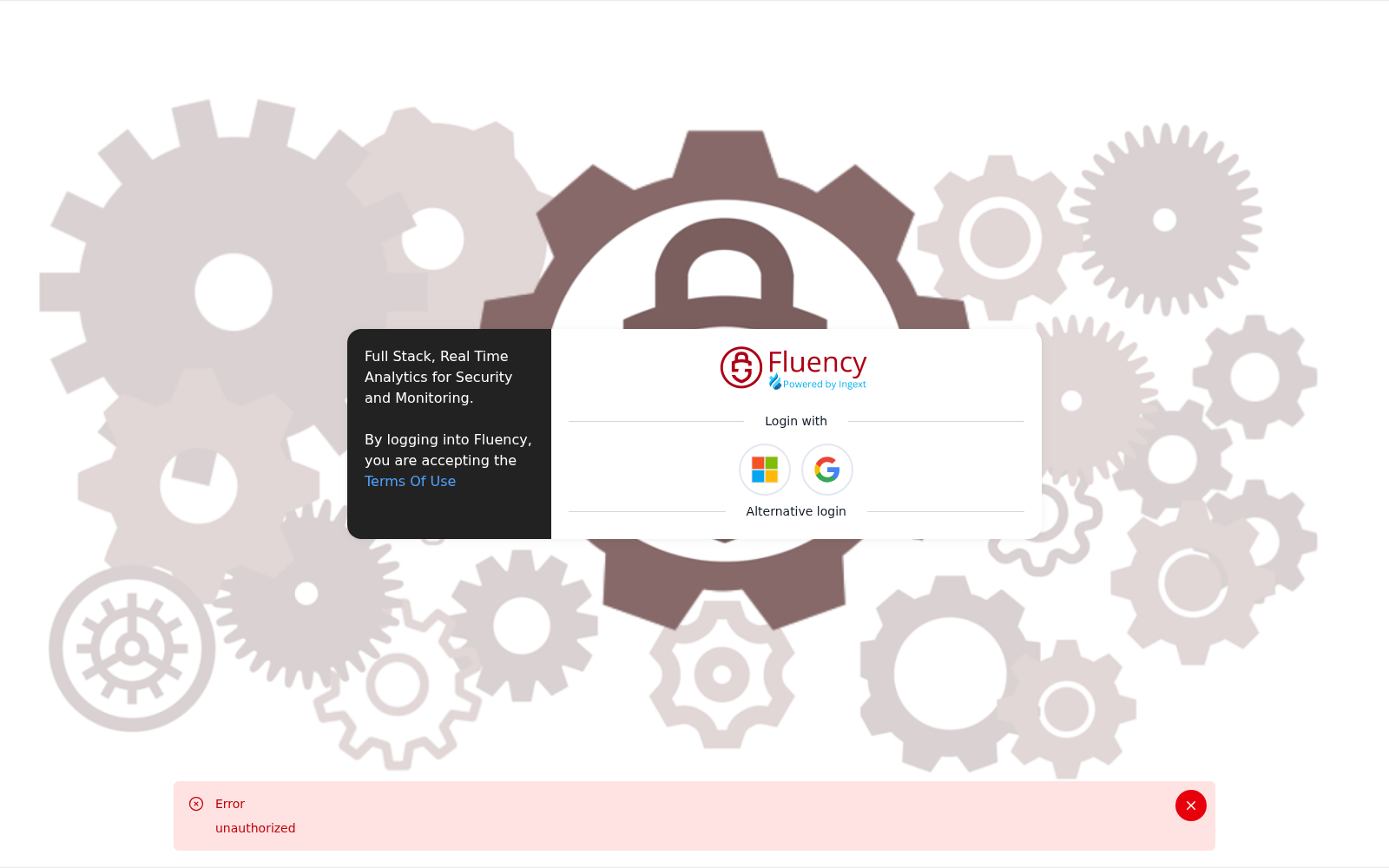
You will not need to type in your email/password credentials directly in Fluency to use OAuth, and will instead authenticate with the OAuth provider.
OAuth App permissions
If this is the first time your organization has used Fluency, you may be asked to accept certain Application Permissions by the OAuth provider before you are allowed to proceed.
Microsoft
The following permissions are required in order to enable Fluency Cloud to login via Azure.
- Sign you in and read your profile
- Maintain access to data you have given it access to
You will see the following page after successful redirect to Microsoft for the first time:
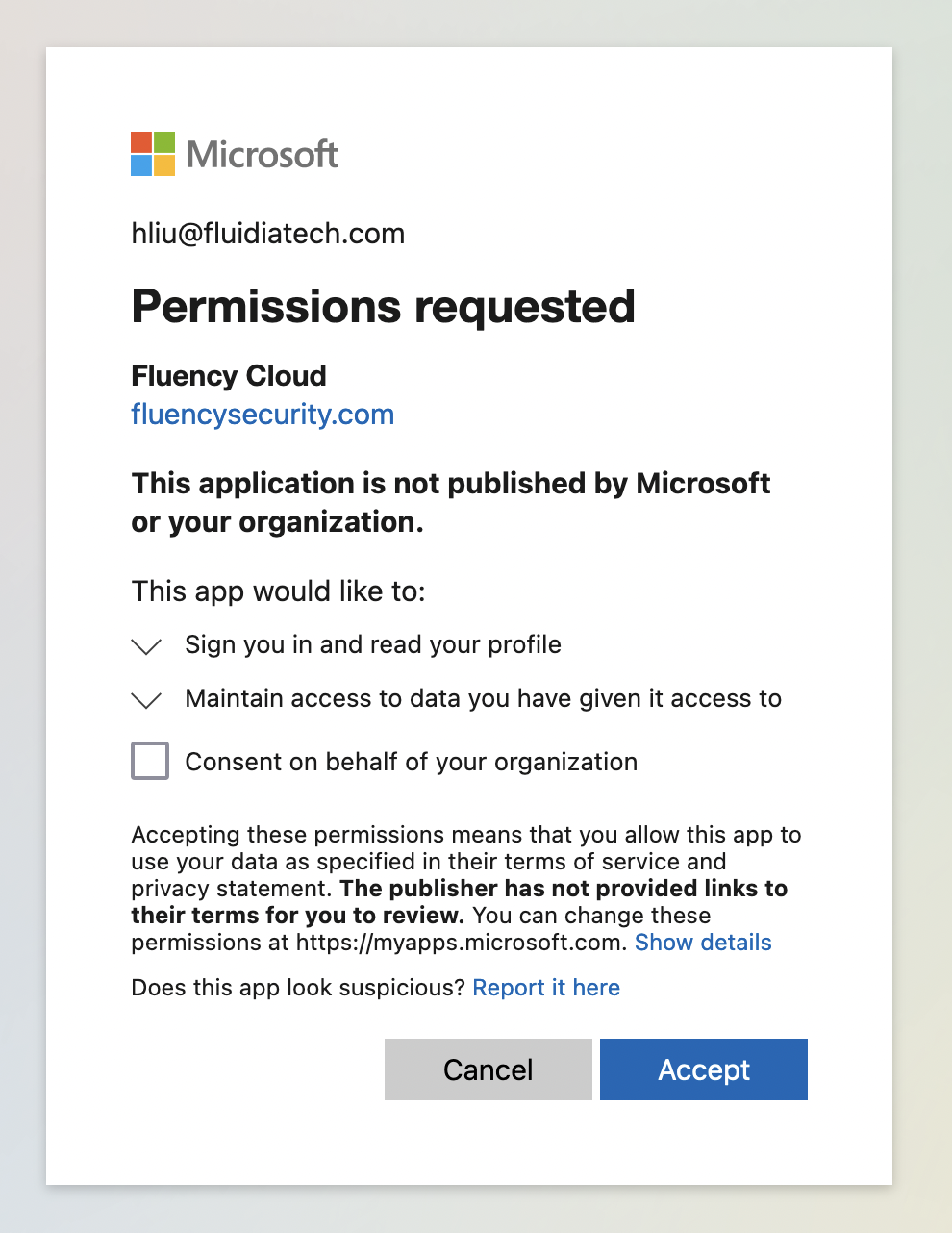
Upon granting consent, you will be redirected back to the Fluency portal, and will proceed with the OAuth authentication.
Alternative Login
If your organization does not use one of the above providers for OAuth, or if you would simply like to use your username(email) / password credentials to log in, choose the "Alternative Login" option.
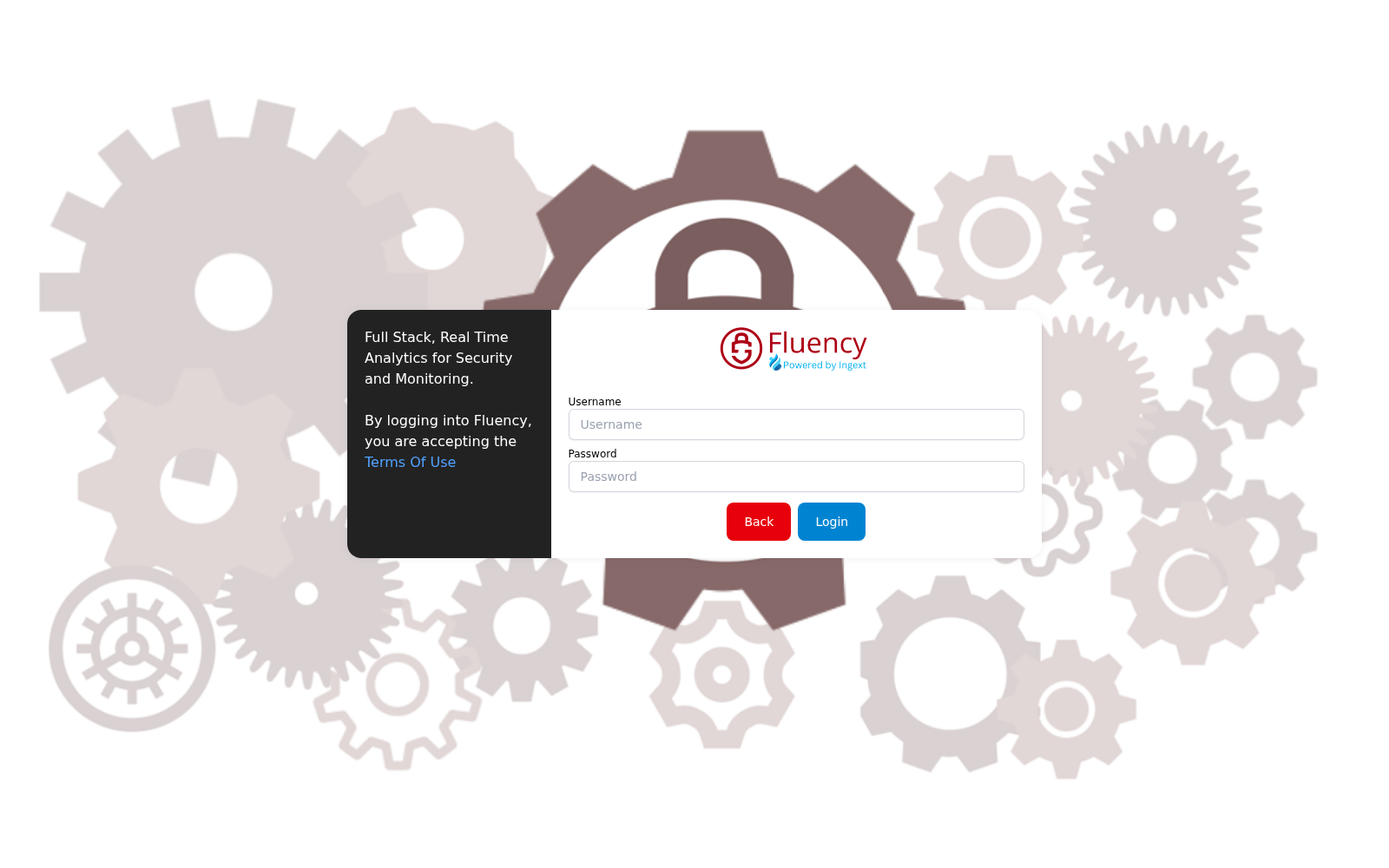
Changing your password
After using the username / password option to log in, your password is changed from your own Profile page. Open the account avatar at the right end of the navigation bar and choose your email address; the Profile page opens at URL path /user/profile.
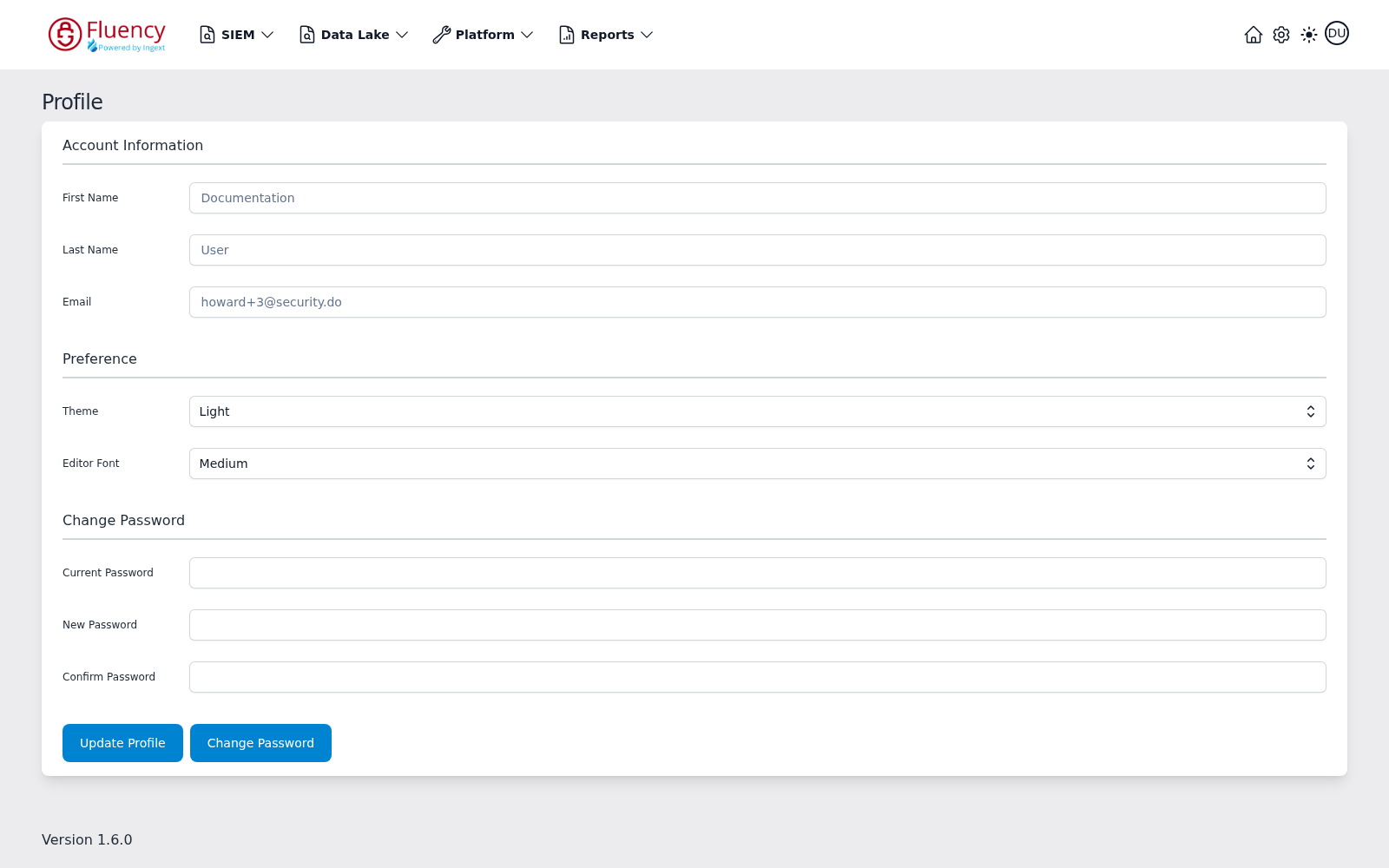
The page is a single card in three sections. Fill in the Change Password section at the bottom — Current Password, New Password, and Confirm Password — then click the Change Password button. Leaving Current Password empty produces a red error toast reading Please enter your current password.
The two sections above it are saved separately, with the Update Profile button:
- Account Information — First Name, Last Name, and Email.
- Preference — Theme (Light or Dark) and Editor Font (Small, Medium, or Large).
A successful save shows a green Profile updated successfully toast. The application version is printed in the lower-left corner of the page.
If your account signs in through an OAuth provider, password management belongs to that provider and this section does not apply.
Additional User Access
Additional accounts can be added and configured in the Users area of the Settings page, opened with the gear icon in the navigation bar (Refer to the Managing Users page for details).
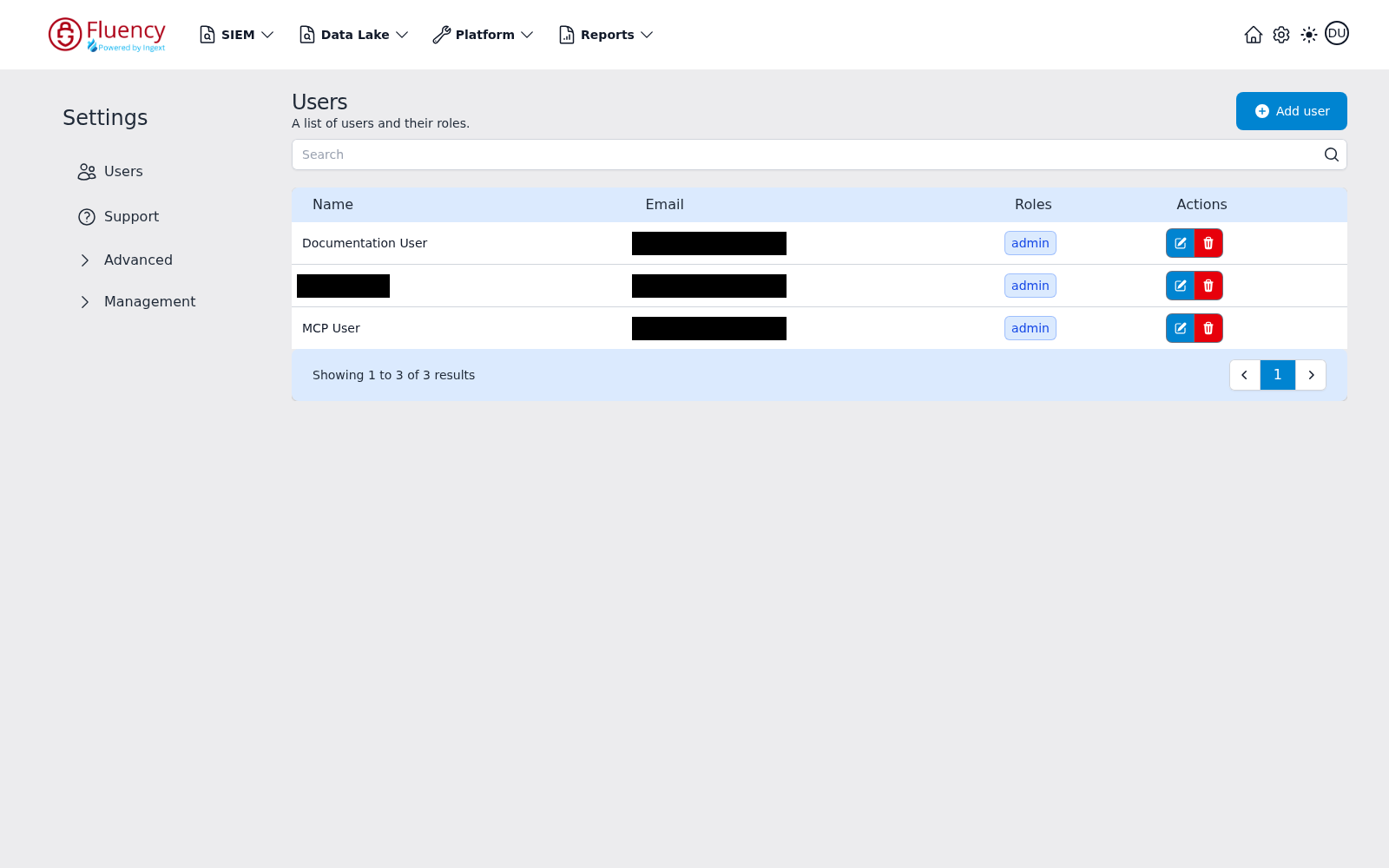
Settings opens on the Users area, subtitled "A list of users and their roles.", with an Add user button in its upper-right corner and a Search box above a table of Name, Email, Roles, and Actions. Add user opens the Add User dialog, which asks for First Name, Last Name, Username, Email, Company, and Roles — all required — plus an OAuth checkbox under User Authentication that enables OAuth sign-in for that user.