Audit
The Audit area is described from the July 2026 capture of the current interface. The Activity Review Page section at the end is from the older interface — no User Activity button appears in the current capture — and is kept only until it can be re-verified.
Separate from the Fluency RiskScore, there is a dedicated audit for reviewing users of the Fluency system. It records the platform's own interface and API usage, which is distinct both from the customer events flowing through the pipeline and from risk scoring.
Opening the Audit area
Open the Settings page (gear icon in the navigation bar), expand the Management group in the sidebar, and choose Audit (URL path /settings/audit). Clicking Management expands the group in place, without leaving the page, to reveal three entries — Audit, Reports, and Lake Tasks:
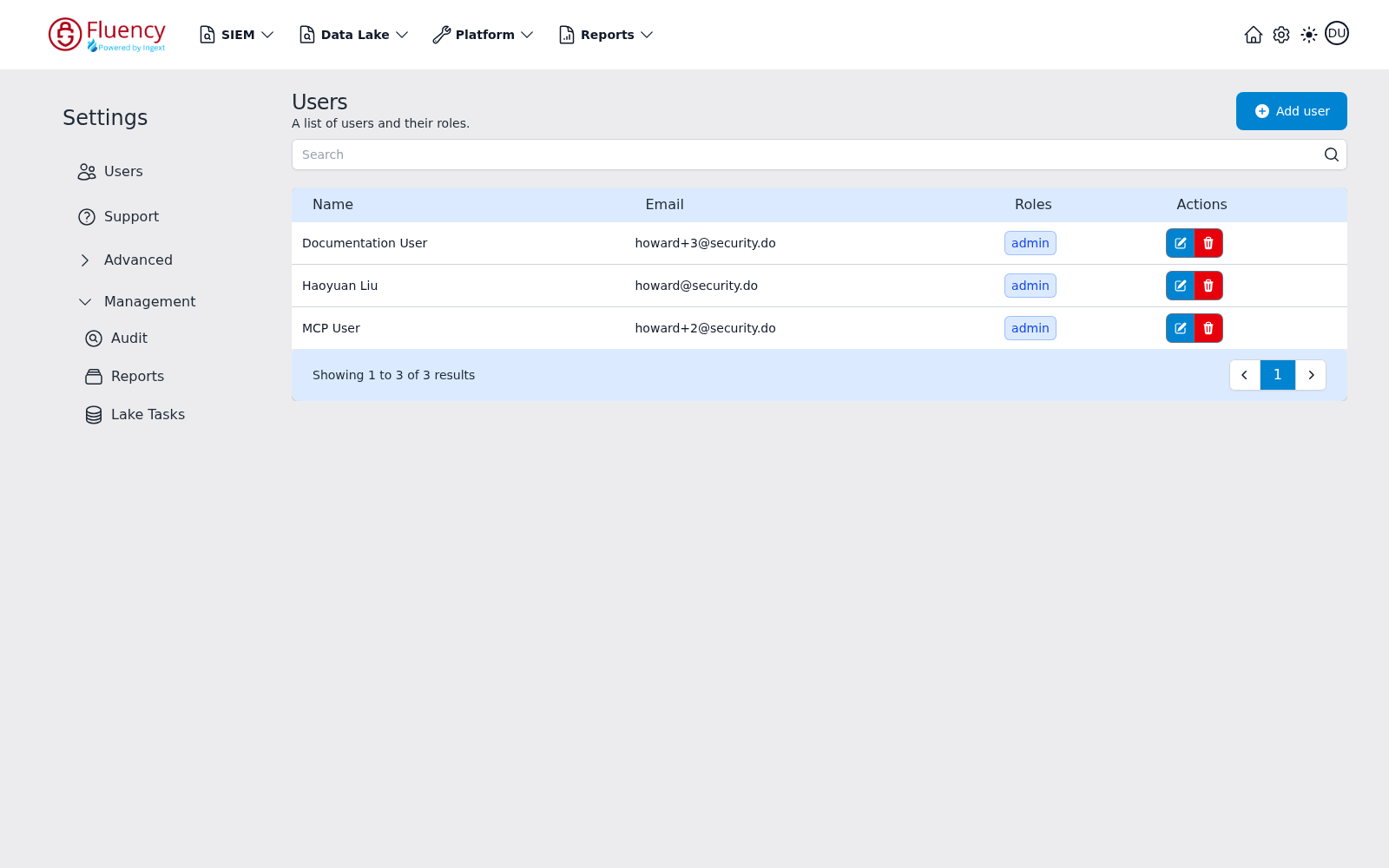
The Audit page
The page is titled Audit, subtitled Audit logs of user activities in the Fluency portal, with a Download Audit Logs button in the upper-right corner. Below the header a Search field with a Search button filters the log by text. The rest of the page is split into a faceted filter panel on the left and the log table on the right.
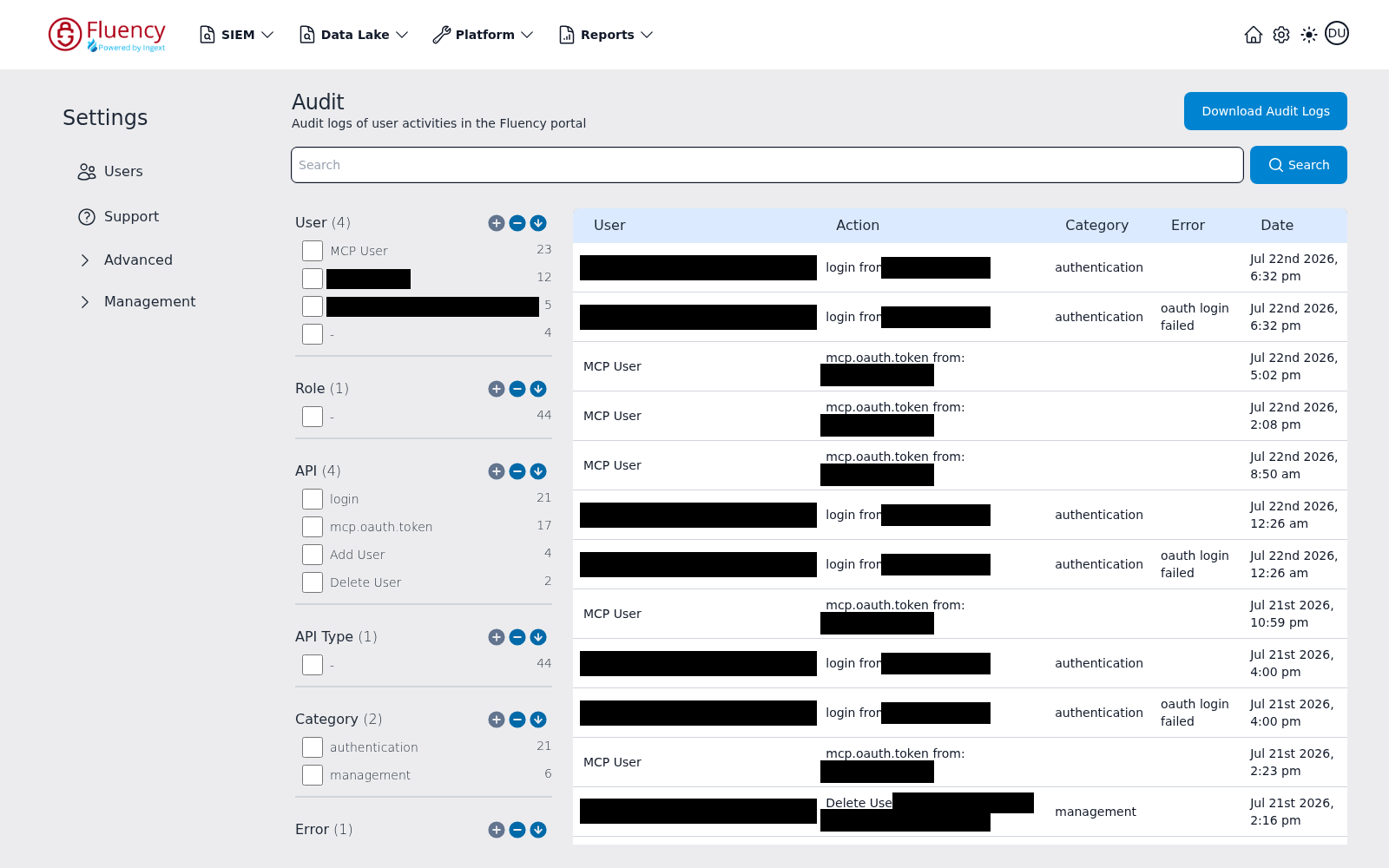
The audit table
The table has five columns:
- User — the actor that performed the action. Both successful and failed actions appear; failed sign-ins are attributed to the identity they were attempted with, such as an
oauth2:address, rather than to a named account. - Action — what was done, with the source IP appended — for example login from: 71.178.173.2, mcp.oauth.token from: 160.79.106.130, or Delete User Delete user Howard Liu from: 71.178.173.2.
- Category — the action's category, such as authentication or management.
- Error — any error associated with the entry, such as oauth login failed. Successful entries leave it blank.
- Date — when the action occurred.
A pagination bar below the table pages through the results.
Filtering
The panel on the left is a faceted filter. Each field the log can be narrowed by appears as a group; every value in a group shows the number of matching records and a checkbox that filters the table to it. The groups are User, Role, API, API Type, Category, and Error, and each group header carries controls to expand it, collapse it, and sort its values.
The count beside a group name is the number of distinct values it holds, so API (4) on a quiet instance means only four kinds of action were recorded in the period.
Two facets carry most of the weight in a review:
- API — the action itself, such as login, mcp.oauth.token, Add User, or Delete User. Use it to answer "what changed?".
- Error — combine it with Category: authentication to isolate failed sign-ins.
Exporting
Download Audit Logs, in the upper-right corner, exports the audit log for an access review or an auditor request.
Activity Review Page
No User Activity button appears in the July 2026 capture of the Audit page; its only header action is Download Audit Logs. The three summaries below are from the older interface and need to be re-verified against the current product.
In the upper right corner of the table, there is a button User Activity. Clicking this button will show the summary of users.
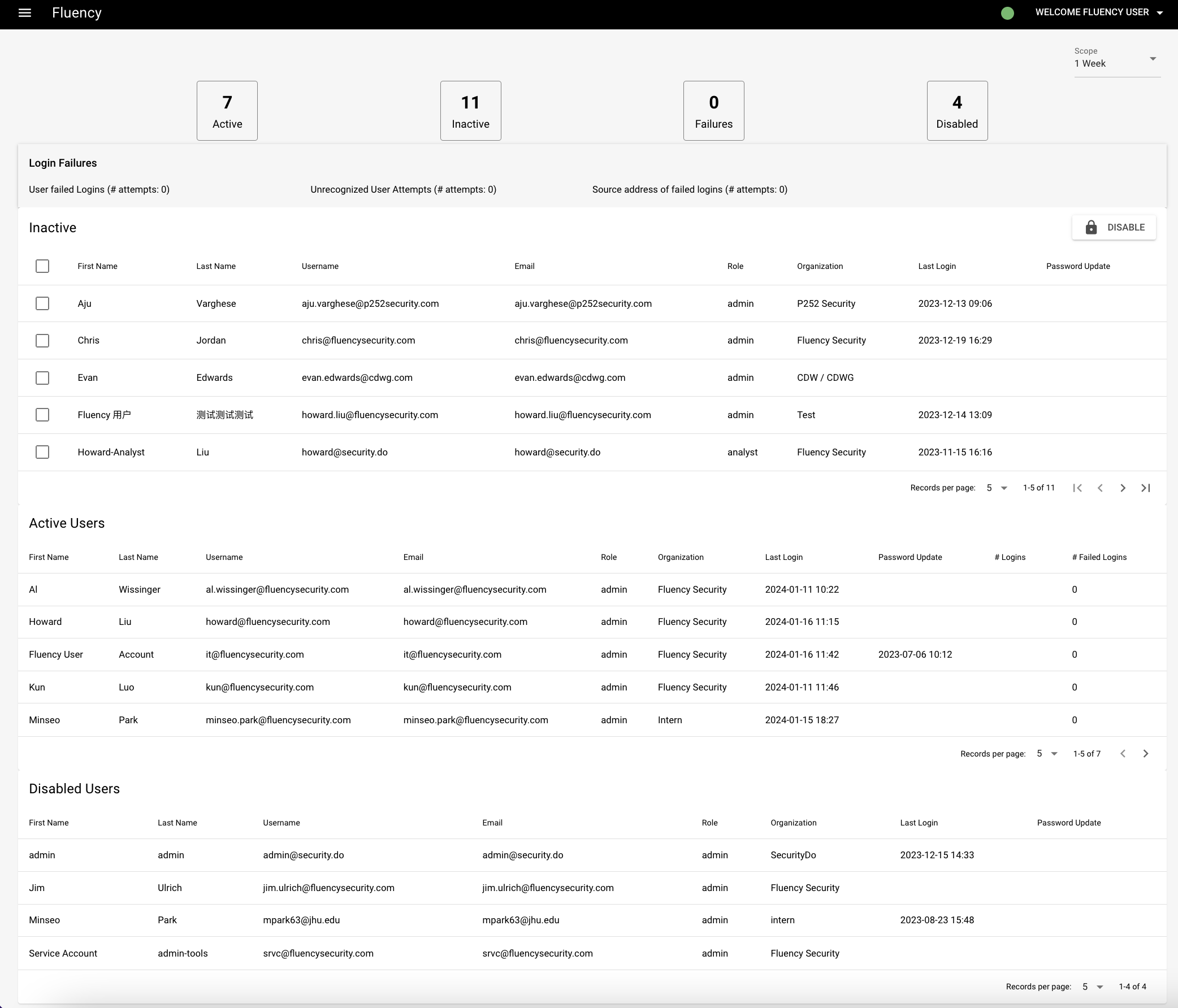
Inactive Users
The first table on the page highlights users that have not logged into the system for thirty (30) days. In this case, it is recommended to disable such users. To do so, check the select box next to users to disable, and then click the disable button (lock icon).
Active Users
This table provides a list of users that have recently logged into the system. The table shows the last login and any failed login attempts.
Disabled Users
This is a list of disabled users. If the users are no longer required, go to the Users page and delete them.
Demo
An interactive demo of the user audit page is available here: User Audit (Storylane)
Related
- Page Functionality → Settings → Audit — the page reference.
- What Is an Audit Log — what is recorded, retention, and using audit data in a review.
- Managing Users — the actions that produce management category entries.